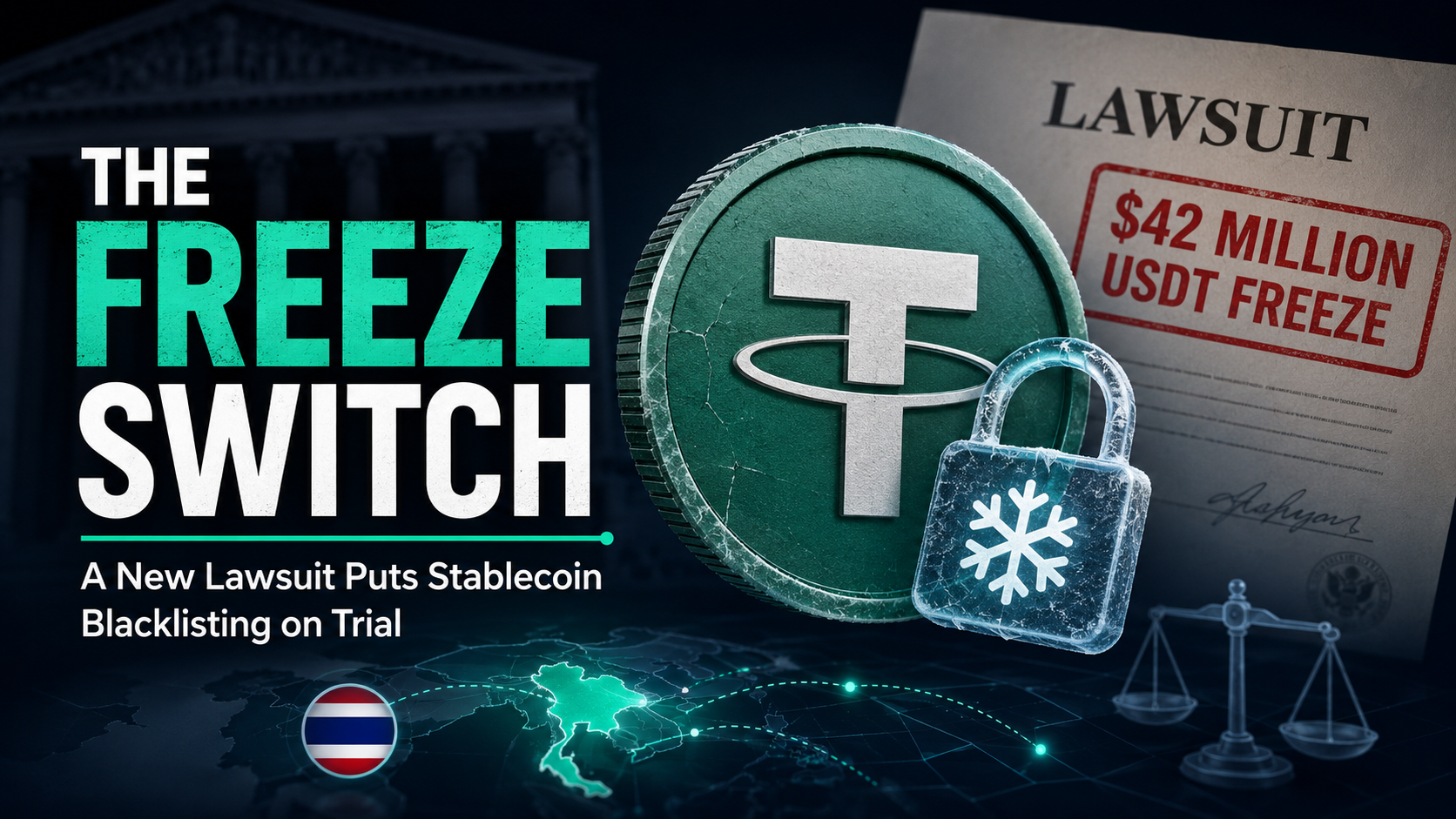
Every major fiat-backed stablecoin — USDT, USDC and the rest — ships with a capability most users never think about: the issuer can freeze any address, instantly, from its side. The tokens stay in the wallet but become untransferable. It is used routinely against hacks, sanctioned entities and scam proceeds, and it is generally regarded as one of the "responsible" features that made stablecoins acceptable to regulators.
A lawsuit filed in New York on 31 August 2026 tests where the limits of that power are.
The claim
According to the complaint, Tether blacklisted ten Ethereum wallets holding about $42.4 million in USDT on 30 October 2025, after what the plaintiffs describe as an informal request from a Homeland Security Investigations agent. A US seizure warrant for the funds was not issued until 19 February 2026 — more than three months later. The plaintiffs, two Thai businessmen contesting a wider fraud case, are asking a court to order the addresses removed from the blacklist and to bar Tether from burning the frozen tokens and reissuing them to a government wallet before any final forfeiture ruling.
Tether has not been found to have done anything unlawful, and freezing suspected criminal proceeds is squarely within its stated policies. The dispute is about process: whether a private company should act on a phone call from law enforcement, before a judge has signed anything.
Why it matters beyond this case
Stablecoins now settle enormous volumes of legitimate commerce, especially outside the US. The same freeze mechanism that stops a thief also means that access to a "digital dollar" depends on an issuer's compliance decisions — decisions made quickly, with limited transparency, and hard to appeal. For users in countries where stablecoins function as everyday savings, that is a meaningful counterparty risk, not a footnote.
It also sharpens a contrast. Part of crypto's original pitch was censorship resistance. Fiat-backed stablecoins deliberately trade that away for price stability and bank-grade compliance — and this case is a reminder of exactly what is on the other side of that trade.
What to watch
- Whether the court engages with the "warrant gap" or treats the freeze as a private business decision outside its review.
- Any response from Tether clarifying its policy on acting before a warrant.
- Whether regulators writing stablecoin rules — in the US, EU and elsewhere — add explicit due-process requirements for freezes.
This article is general commentary for information only and is not legal or investment advice.