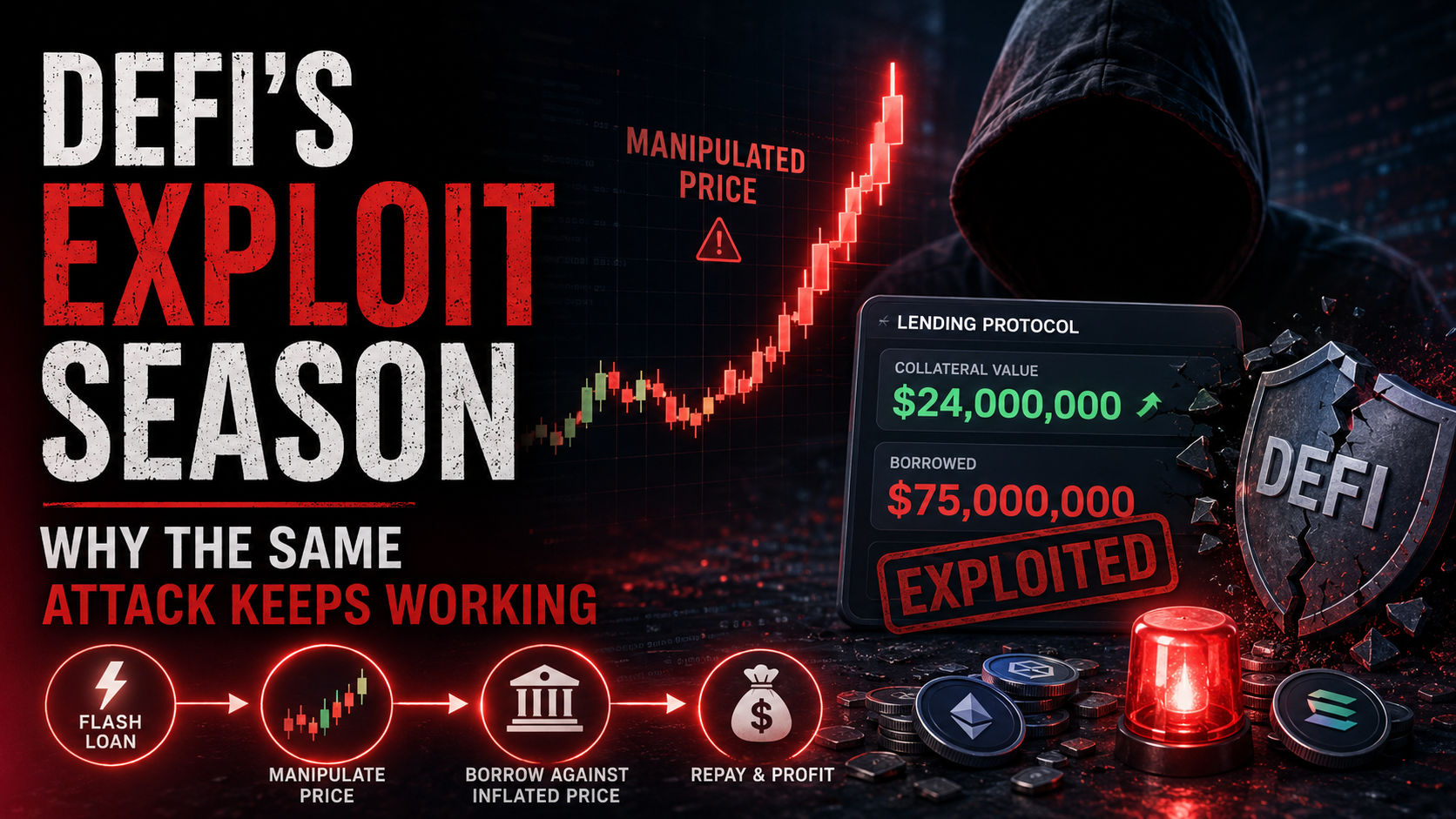
The last week produced a grim run of DeFi headlines: the Cronos network halted after a roughly $75 million exploit of a lending market, a smaller Flow-based protocol drained of about $9 million, and this week a lending application connected to a widely used infrastructure stack hit for a reported $75 million. Different chains, different teams — nearly identical attack.
The attack, in plain terms
Most lending protocols need to know what your collateral is worth. They get that number from a price oracle. If the oracle reads its price from a single on-chain trading pool, and that pool isn't very deep, an attacker can move the price on purpose:
- Borrow a large sum instantly with a flash loan (no collateral, repaid in the same transaction).
- Dump it into the thin pool to spike the price of some token.
- Post that now-"expensive" token as collateral and borrow far more than it is really worth.
- Repay the flash loan, keep the difference, walk away. The lending pool is left holding near-worthless collateral.
All of it can happen in a single block, in seconds.
Why it isn't fixed
The defences are well known — use deep-liquidity price sources, blend several oracles, use time-weighted averages, cap how fast a reported price can move. The problem is that new protocols keep launching without them, often to list a long tail of smaller tokens that only have thin pools to price against. According to blockchain-analytics firm TRM Labs, price-manipulation exploits have already happened more than twice as often in 2026 as in all of 2025. It is now the single most common way large sums leave DeFi.
What it means for users
If you lend, stake or provide liquidity on-chain, the oracle design of the protocol is not a technical detail — it is the main thing standing between your deposit and an attacker. Reasonable questions before depositing: where does this protocol get its prices, how many independent sources, and has the oracle setup been audited specifically? Protocols that can't answer clearly are the ones that show up in next week's headlines.
This article is general commentary for information only and is not investment or security advice.