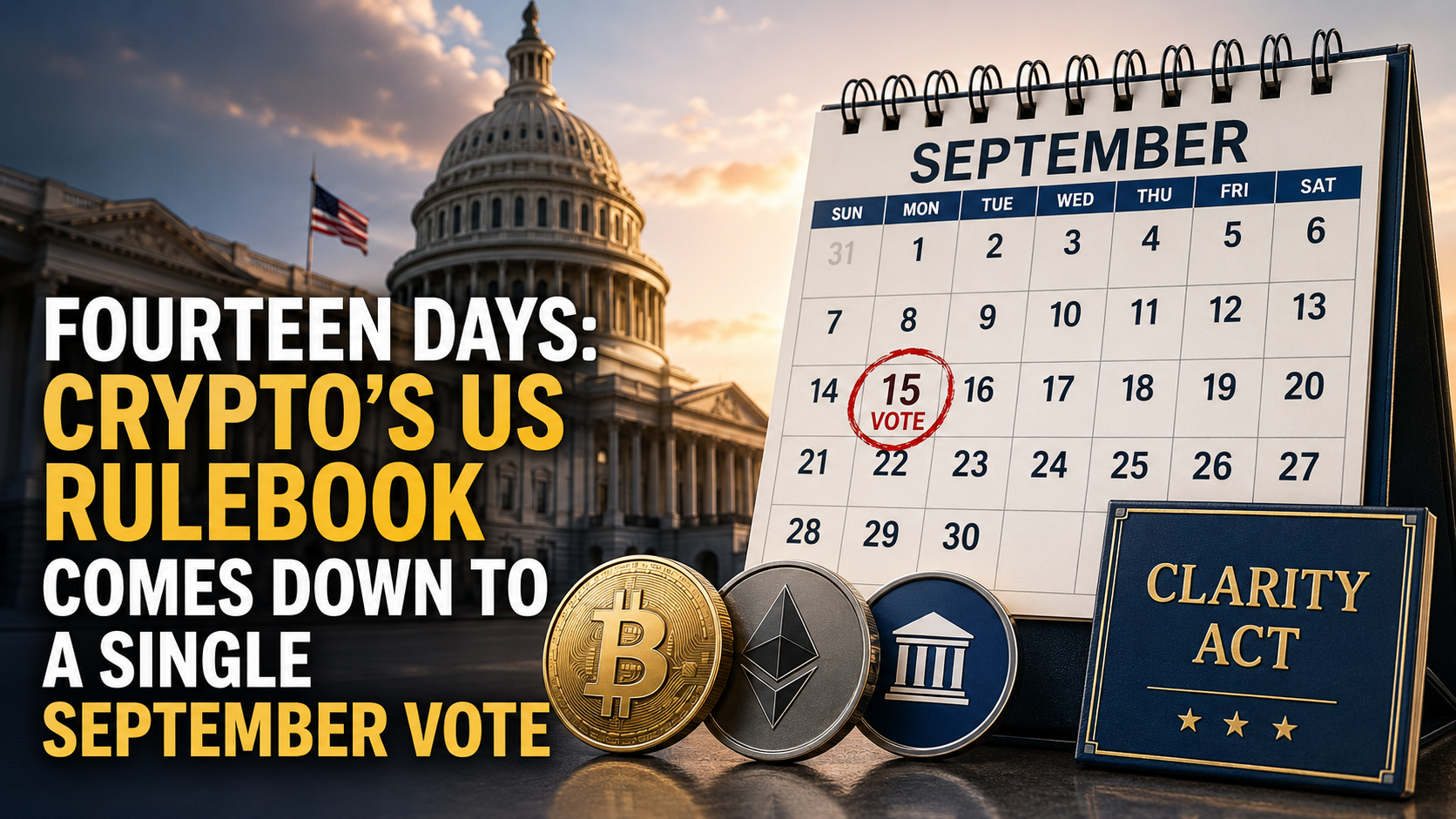
A week ago we wrote that US regulators had stopped waiting for Congress and started writing crypto rules themselves. September is when Congress gets one more chance to do it first.
The vote
Senate Majority Leader John Thune has filed for a cloture vote on 15 September on the motion to proceed to the CLARITY Act — the bill that would divide oversight of digital assets between the SEC and the CFTC and give tokens a formal legal classification. Cloture needs 60 votes. If it fails, the bill is, in practical terms, dead for this Congress.
Why it's close
The hold-ups are not technical, they are political. Several Democrats say the bill's anti-money-laundering provisions are too weak and its ethics language too soft — the latter tied to concerns about the President and his family's own crypto ventures. There is also an unresolved fight over whether state attorneys general get to enforce the bill's ban on government officials running crypto businesses, or whether that stays solely with the Justice Department.
None of these are new. They are the same issues that stopped the bill from getting a floor vote before the August recess.
The calendar is the real opponent
Even supporters concede the timing is brutal. After the recess the Senate has roughly 14 working days before it breaks again for the October midterm campaign. A bill this size normally needs weeks of floor time, amendments and conference with the House. Miss this window and the process most likely resets with the next Congress in 2027.
What it means either way
If CLARITY advances, expect a period of horse-trading on amendments rather than an instant law — but the direction of travel would be set. If it stalls, the vacuum gets filled by rulemaking: the SEC's proposed "Regulation Crypto Assets," CFTC guidance, and state-level regimes, each moving at its own pace. That is a workable outcome for large, well-lawyered firms and a murkier one for smaller projects that wanted a single clear statute to build against.
For a market that spent August focused on interest rates, the next big non-price catalyst is a roll-call vote on a Tuesday in the middle of the month.
This article is general commentary for information only and is not legal or investment advice.